

Cloud ERP solutions for healthcare help organizations address mounting pressure to deliver high-quality care while managing costs, regulatory compliance, and operational complexity. Manual processes and fragmented systems often lead to inefficiencies, errors, and delays. This guide is designed for healthcare administrators, IT decision-makers, and operations managers seeking to understand how cloud ERP solutions can transform healthcare operations.
Here, we provide an overview of cloud ERP solutions, their benefits, and key implementation considerations for the healthcare sector. Cloud-based ERP solutions offer unmatched flexibility and accessibility, enabling healthcare providers to access real-time data and manage operations remotely. Cloud-based ERP is a transformative technology that allows healthcare organizations to automate processes, improve scalability, and enhance patient care.
As healthcare organizations continue to undergo digital transformation, adopting cloud ERP solutions has become essential to remain competitive and deliver better outcomes.
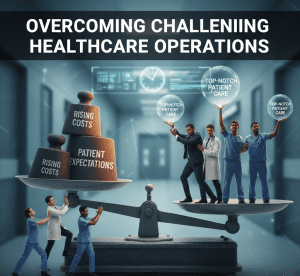
Overcoming Challenging Healthcare Operations
If you’re in healthcare, you’re facing significant pressure right now. Your organization is being squeezed by rising operational costs, constantly changing regulatory requirements, and patients who expect more than ever. You’ve got to balance all these challenges while still delivering top-notch patient care, which isn’t exactly easy.
Managing extensive patient data repositories and ensuring compliance with complex healthcare regulations pose significant operational challenges for healthcare organizations. This is where healthcare ERP systems provide integrated solutions to streamline these complex requirements. These platforms offer a centralized hub for managing patient records, streamlining clinical workflows, and improving financial management.
With the right ERP system, you can cut down on errors, make better use of your resources, and actually stay on top of healthcare compliance without losing your mind. It helps your organization optimize how you do business, control operational costs, and make smart, data-driven decisions that’ll help you grow while still delivering excellent patient care.
To address these challenges, healthcare organizations are increasingly turning to cloud ERP systems.
How Cloud ERP Improves Hospital Operations
Cloud-based ERP systems and EHR systems work together to provide real-time access to patient records, enhancing collaboration among healthcare providers. Patient management and practice management modules streamline workflows and improve operational efficiency. Cloud ERP systems reduce manual data entry, improving reporting accuracy and efficiency.
Cloud ERP solutions can improve hospital operations by:
- Automating and integrating administrative tasks such as scheduling, payroll, and HR.
- Streamlining billing, claims processing, and revenue cycle management.
- Optimizing staff and equipment allocation for better patient outcomes.
- Providing real-time inventory tracking and supplier management.
Furthermore, resource management is enhanced by optimizing staff scheduling and operational efficiency within a unified platform. Remote access and remote monitoring devices support telehealth, remote patient monitoring, and off-site operations. Cloud ERP systems also streamline payroll, shift scheduling, performance tracking, and HR analytics. They provide a fully longitudinal view of a patient’s medical history promptly.
Compliance is maintained through automated regulatory tracking and audit trail generation. Cloud ERP solutions enable secure, centralized storage and real-time access to patient records, integrating various hospital and clinic functions into a unified platform.
Patient Data Management
Efficient hospital operations depend on accurate patient data management, which is a core strength of cloud ERP systems.
When you’re managing patient data in healthcare, you need systems that operate efficiently and keep data secure. It’s essential to helping deliver the care your patients deserve. Healthcare ERP systems give you a centralized platform where you can store and access electronic health records, so your healthcare team can quickly pull up a patient’s medical history, documents, and other critical information when they need it.
This real-time access to patient data not only improves outcomes but also enhances the overall patient experience. By breaking down data silos and strengthening data security, healthcare ERP solutions help your organization minimize errors and ensure sensitive patient information remains protected. With robust patient data management tools at your fingertips, you can deliver more personalized care and achieve higher levels of patient satisfaction.
Workforce Management
Managing patient data is only one aspect; workforce management is equally vital for healthcare success.
A skilled and well-managed workforce is honestly the backbone of your healthcare organization’s success. But let’s be realistic—effective workforce management can be complex, and that’s where healthcare ERP systems come into play. These comprehensive platforms ensure that your healthcare professionals are scheduled efficiently, compensated accurately, and supported in their professional development.
Healthcare ERP systems provide the tools you need to manage scheduling, payroll, and performance, enabling your leadership team to optimize resource utilization and reduce labor costs that keep rising. Today, these systems also support training and development initiatives, ensuring your staff have the necessary skills to deliver high-quality patient care. In short, by streamlining your workforce management, healthcare ERP solutions help your organization enhance employee satisfaction, improve operational efficiency, and maintain that high standard of care your patients deserve.
Compliance and Security in Cloud ERP
Beyond managing people, healthcare organizations must also ensure compliance and data security, which is where cloud ERP systems excel. Healthcare data is highly sensitive, and maintaining regulatory compliance with HIPAA and other applicable regulations is non-negotiable.
Cloud ERP systems can employ:
- Encryption and secure access controls
- Regular compliance audits
- Role-based permissions
Cloud-based architecture also offers scalability and robust security for sensitive patient data, which is crucial for meeting regulations such as HIPAA. Healthcare ERP systems should offer robust compliance and security features to protect sensitive patient data. ERP systems help healthcare organizations maintain compliance by automating regulatory tracking, generating audit trails, and automating reporting processes.
ERP for Healthcare Supply Chain & Inventory Management
In addition to compliance, effective supply chain and inventory management are essential for uninterrupted patient care. Cloud ERP can:
- Track inventory in real time for optimized procurement and management;
- Reduce waste and stock-outs through automated demand forecasting; and
- Improve vendor and supplier management.
Healthcare facilities, such as hospitals and clinics, benefit from efficient supply chain management, which helps ensure uninterrupted patient care by preventing disruptions and shortages. Cloud ERP solutions provide real-time inventory tracking, automated demand forecasting, and supplier management, allowing supply chain managers respond quickly to shifting demand and maintain optimal stock levels.
Financial Management and ROI
Financial management is another area where cloud ERP delivers significant value to healthcare organizations.
Cloud ERP provides robust financial tools to improve financial management for healthcare organizations. These solutions automate billing, claims processing, and revenue cycle management, thereby improving cash flow by streamlining processes, reducing errors, and ensuring timely payments. ERP systems also provide real-time visibility into financial data and key performance indicators, enabling better financial reporting, budgeting, and cost control.
By providing access to real-time, unified data and analytics, ERP systems improve decision-making and help measure ROI by reducing operational costs and improving efficiency.
Business Intelligence and Analytics
Leveraging financial and operational data is only possible with advanced business intelligence and analytics capabilities.
Let’s be honest, your healthcare organization’s churning out massive amounts of data every single day – we’re talking financial records, patient info, operational metrics, the whole nine yards. And here’s the thing: if you’re not leveraging this data, you’re basically flying blind when it comes to making smart decisions and driving growth. That’s where healthcare ERP systems come in, with powerful business intelligence and analytics tools that let you dive deep into patient data, monitor your financial performance, and track operational costs in real time.
Real-Time Data Insights
With these insights in your back pocket, you can spot trends, streamline your business processes, and make strategic moves that’ll boost patient outcomes while keeping your financial health in check. The real game-changer? Having real-time visibility into your key metrics means you can pivot quickly when challenges arise and capitalize on new opportunities.
Strategic Decision-Making
Business intelligence and analytics empower healthcare organizations to make data-driven decisions, improve patient care, and drive operational efficiency. By analyzing trends and performance metrics, organizations can stay ahead of the curve in this fast-moving industry.
Future Trends in Healthcare ERP
As technology evolves, future trends in healthcare ERP will further enhance these capabilities with:
- AI-driven analytics for predictive insights
- Integration with telehealth and IoT for real-time monitoring
- Advanced interoperability for seamless data exchange
Conclusion
Cloud ERP is no longer a luxury. It’s essential for healthcare organizations striving for efficiency, compliance, and improved patient outcomes. By embracing this technology, hospitals and clinics can reduce costs, improve workflows, and deliver superior care.
Ready to transform your healthcare operations? Explore leading Cloud ERP solutions for healthcare today.